Desk Stretches to Undo a Day of Sitting
 Lena Anderson
I remember sitting in a high-rise office in Midtown, staring at a spreadsheet that felt like it was vibrating, while my neck felt like it had been replaced by a solid block of concrete. I was chasing that next big promotion, thinking that if I just sat still and powered through, I’d eventually reach the top. But all I really reached was a massive tension headache and a deep resentment for my ergonomic chair. We’ve been sold this lie that productivity requires being a statue, but honestly, neglecting your body is just a bad investment with zero ROI. You don't need a fancy, $2,000 standing desk or a subscription to a wellness app to fix this; sometimes, all you really need are a few intentional desk stretches to remind your nervous system that you're still human.
I’m not here to give you a complicated yoga flow that requires you to change into leggings mid-meeting. Instead, I’m going to share the no-nonsense, bite-sized movements that actually work when you're caught in the middle of a deadline. My goal is to help you reclaim your physical comfort without sacrificing your professional momentum.
Table of Contents
- Relieve Neck Tension at Work and Find Your Calm
- Wrist Stretches for Typing to Protect Your Creative Flow
- Five Tiny Rituals to Keep Your Body (and Mind) From Tightening Up
- Small Moves, Big Impact: Your Quick Guide to Staying Balanced
- ## A Quick Mindset Shift
- Taking the Next Step Toward Balance
- Frequently Asked Questions
Relieve Neck Tension at Work and Find Your Calm

We’ve all been there: you’re deep in a spreadsheet or caught in a marathon Zoom call, and suddenly, your neck feels like it’s made of concrete. That "tech neck" isn't just a nuisance; it’s your body’s way of screaming for a timeout. To relieve neck tension at work, I love starting with gentle ear-to-shoulder tilts. Don't rush it! Instead, imagine you're melting into the movement, much like I do during my morning yoga flow. This isn't just about comfort; it’s a vital part of preventing repetitive strain injury before it starts to derail your focus.
If you're feeling particularly stuck, try incorporating some simple seated yoga for office workers right at your desk. A slow, controlled chin tuck can work wonders for resetting your alignment. Think of it as a tiny, rhythmic reset button for your nervous system. Listen to what your body is telling you—if it’s tight, it’s time to move. Taking sixty seconds to breathe and release that tightness isn't "slacking off"; it's actually an investment in your long-term productivity and peace of mind.
Wrist Stretches for Typing to Protect Your Creative Flow
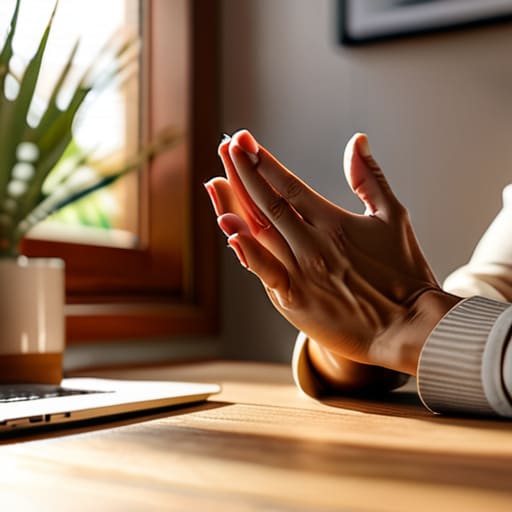
If you’re anything like me, your hands are essentially your most important business tools. Whether you’re crunching numbers in a spreadsheet or drafting a visionary proposal, your wrists take a massive amount of heat. I’ve seen so many brilliant professionals hit a wall simply because they ignored that nagging ache in their forearms. To keep your momentum high, try the "prayer stretch": press your palms together in front of your chest and slowly lower them toward your waist until you feel a gentle pull. It’s a tiny ritual, but preventing repetitive strain injury starts with these small, intentional moments of care.
Don't wait for the pain to become a distraction that breaks your focus. Another quick move is the "reverse prayer," where you press the backs of your hands together, fingers pointing down. This helps counteract that constant, curled-in typing position we all fall into. Think of these movements as a way of honoring your body's capacity to create. By incorporating these wrist stretches for typing into your daily flow, you aren't just protecting your joints; you're ensuring your creative energy stays fluid and uninterrupted.
Five Tiny Rituals to Keep Your Body (and Mind) From Tightening Up
- The "Seated Cat-Cow" Flow: Just like in my yoga practice, you can bring a little movement to your spine without even leaving your chair. Inhale to arch your back and look up slightly, then exhale to round your spine and tuck your chin. It’s like a little reset button for your nervous system.
- Shoulder Blade Squeezes: We spend so much time hunched over laptops that our posture starts to mimic a question mark. Every hour, imagine you're trying to hold a pencil between your shoulder blades. It opens up that chest area and reminds you to breathe deeply.
- The Hip Opener: Sitting is basically a slow-motion freeze for your hips. While you're on a call, try crossing one ankle over the opposite knee (the "Figure Four" position) and lean forward just a tiny bit. Your lower back will thank you later!
- Eye Palming for Mental Clarity: This isn't a physical stretch, but your brain needs it too. Rub your hands together to create warmth, then gently cup them over your closed eyes for thirty seconds. It’s a mini-meditation that breaks the "screen trance" and helps you refocus.
- The Standing Reset: If you can, set a timer to stand up every 45 minutes. Even if it's just for a quick lap around your desk or a moment to reach for the ceiling, that shift in blood flow is the difference between feeling like a zombie and feeling like a professional.
Small Moves, Big Impact: Your Quick Guide to Staying Balanced
Listen to your body’s subtle cues; a quick stretch isn't a distraction from your work, it's an investment in your ability to do it well.
Protect your physical longevity by treating wrist and neck care as non-negotiable appointments in your daily calendar.
Remember that true professional excellence is impossible without physical comfort—don't let a stiff neck stand in the way of your next big breakthrough.
## A Quick Mindset Shift
"Think of these stretches not as another task on your to-do list, but as a tiny, sacred appointment with yourself to remind your body that your worth isn't measured solely by your output."
Lena Anderson
Taking the Next Step Toward Balance

We’ve covered a lot of ground today, from soothing that stubborn neck tension that creeps up during long Zoom calls to protecting your wrists so you can keep your creative flow uninterrupted. Remember, these stretches aren't just "extra tasks" on your to-do list; they are small, intentional investments in your physical longevity. Whether you’re taking sixty seconds to roll your shoulders or a few minutes to release your wrists, you are actively choosing yourself over the relentless grind of your inbox. Integrating these tiny movements into your workday is the simplest way to ensure that your body doesn't pay the price for your professional ambitions.
At the end of the day, I want you to remember that your career is a marathon, not a sprint. You wouldn't dream of running twenty-six miles without stretching first, so don't treat your professional life any differently. True success is hollow if you arrive at the top of the ladder feeling completely depleted and broken. Use these stretches as a way to reclaim your vitality and remind yourself that you are a human being, not just a productivity machine. Take a deep breath, roll those shoulders back, and go out there and conquer your goals—with balance and joy.
Frequently Asked Questions
How often should I actually be doing these stretches to see a real difference in my tension levels?
Think of these stretches like your daily mindfulness practice—consistency beats intensity every single time. If you wait until you’re in actual pain, you’re already playing catch-up. I recommend setting a "movement snack" timer for every 45 to 60 minutes. Even just sixty seconds of movement can reset your nervous system. It’s not about a marathon session; it’s about those tiny, frequent check-ins that keep your body (and your budget for massages!) in check.
I'm always in back-to-back meetings—are there any quick moves I can do discreetly without looking weird on a Zoom call?
I totally get it—the "Zoom fatigue" is real, and the last thing you want is to look like you’re doing a full yoga flow while your boss is presenting a quarterly report! Try subtle seated spinal twists; just rotate your torso slightly while holding your desk for support. You can also do "seated cat-cow" by gently arching and rounding your back. They’re tiny movements, but they’ll keep your spine from turning into a pretzel!
Can these stretches actually help with my focus, or am I just moving my body for the sake of it?
I totally get that skepticism—when you're in the middle of a deep work session, stopping to stretch can feel like a distraction. But trust me, it’s actually a productivity hack! When you move, you’re boosting circulation and sending a fresh hit of oxygen to your brain. It’s like hitting the "refresh" button on your mental browser. You aren't just moving for the sake of it; you're clearing the fog so you can focus better.